




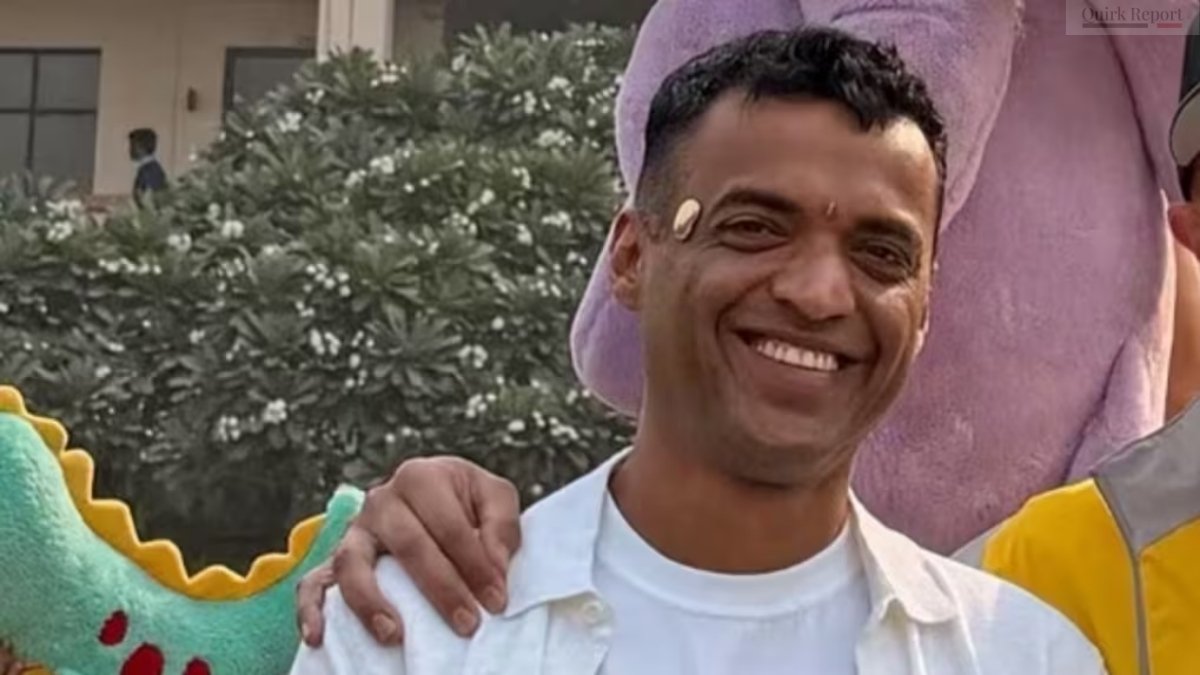
A brief clip from a popular podcast recently set off a wave of online discussion when Zomato founder Deepinder Goyal appeared with a small metallic object attached near his temple. Some viewers initially joked that the object looked like chewing gum stuck to his skin or even a pimple patch, while others circulated memes and guesses about what it could be.
Behind this viral moment lies a more serious story about experimental health technology, personal research, and a scientific idea that Goyal has been quietly exploring.
What the device actually was
Contrary to early social media speculation that it might be something trivial like chewing gum or a pimple patch, the object seen on Goyal’s head is far from a gag or cosmetic toy.
The device name is ‘Temple‘ and it is a compact experimental sensor designed to continuously measure ‘cerebral blood flow’, or how blood circulates through the brain in real time. It’s a wearable health monitoring gadget that sticks near the temple of the head and collects physiological data without invasive procedures.
Experts note that tracking cerebral blood flow is an emerging area of research because how blood circulates to the brain is an important indicator of neurological health, ageing, and cognitive function.
How it came to public attention
Goyal appeared on a podcast wearing the device. While the conversation focused on leadership and technology, the unexpected gadget quickly became the talking point online. Some commentators joked about it looking like a misplaced piece of gum or a skin patch — a reflection of how unusual such visible wearables still are in mainstream spaces.
The visual curiosity spread rapidly across social platforms, with people offering every suggestion from “external hard drive” to “charging pad.”
The science behind the sensor
The wearable is not a consumer product or fashion accessory — it’s part of a research effort connected to a theory Goyal has been promoting called the Gravity Ageing Hypothesis.
According to this hypothesis, the constant downward pull of gravity may gradually reduce blood flow to the brain over time, potentially influencing the ageing process. The idea suggests that small, long-term differences in cerebral circulation might affect how quickly brain tissues age. Though unconventional and not widely endorsed by the mainstream scientific community, this theory has been the focus of Goyal’s personal investigations.
Personal investment and research context
The device is being developed under a private research initiative closely associated with Goyal. He has personally committed a significant sum — reportedly around $25 million — to fund this work, emphasizing that his interest is rooted in scientific curiosity rather than marketing or publicity.
Goyal has shared aspects of this research publicly before, positioning it as open to scrutiny and not directly related to Zomato’s business operations.
It’s important to note that the wearable remains in the experimental phase. It’s not commercially available, has not been approved as a medical device, and is primarily used to gather data rather than to provide users with diagnostic feedback.
Why cerebral blood flow matters
Measuring blood flow to the brain has long been a focus in neurology and ageing research. Changes in cerebral perfusion are linked to conditions such as stroke, dementia, and cognitive decline, and researchers in labs globally use advanced tools to study these dynamics.
The idea of monitoring these changes continuously with a wearable is ambitious. Most cerebral blood flow studies are conducted in controlled clinical environments, and portable sensors with real-time output remain largely experimental.
Social media reaction and reality of Zomato Founder
The public’s initial focus on the object’s appearance underscored how unfamiliar such technologies still are. Early guesses like chewing gum or a pimple patch reflect how quickly people jump to relatable comparisons when confronted with something they don’t recognise.
Yet as more information emerged, it became clear that the wearable isn’t a trivial accessory — it’s a tool being used in a serious, long-term research context. Goyal himself has acknowledged wearing the device during a year of internal testing tied to the Gravity Ageing project.
Broader implications
This incident highlights a broader trend: tech founders and innovators are increasingly interested in preventative and longevity-focused health research. Whether or not the Gravity Ageing Hypothesis gains scientific traction, this wearable device’s visibility has brought brain-monitoring technology into mainstream conversation.
For now, the device’s viral moment serves less as proof of a breakthrough and more as a reminder that emerging health technologies can quickly capture public imagination — especially when seen on well-known figures. Its appearance on a high-profile podcast made it a talking point, but the real story lies in the questions it raises about the future of health monitoring and the role of personal exploration in scientific research.
Catch more trending news on Quirkreport.
