



TRENDING NEWS:
A Gen Z worker in India confronted his manager on Monday after being asked to attend a client meeting despite reporting a death in the family, triggering a nationwide conversation on “basic human decency” and the need to update corporate HR practices.
Where the Dispute Started
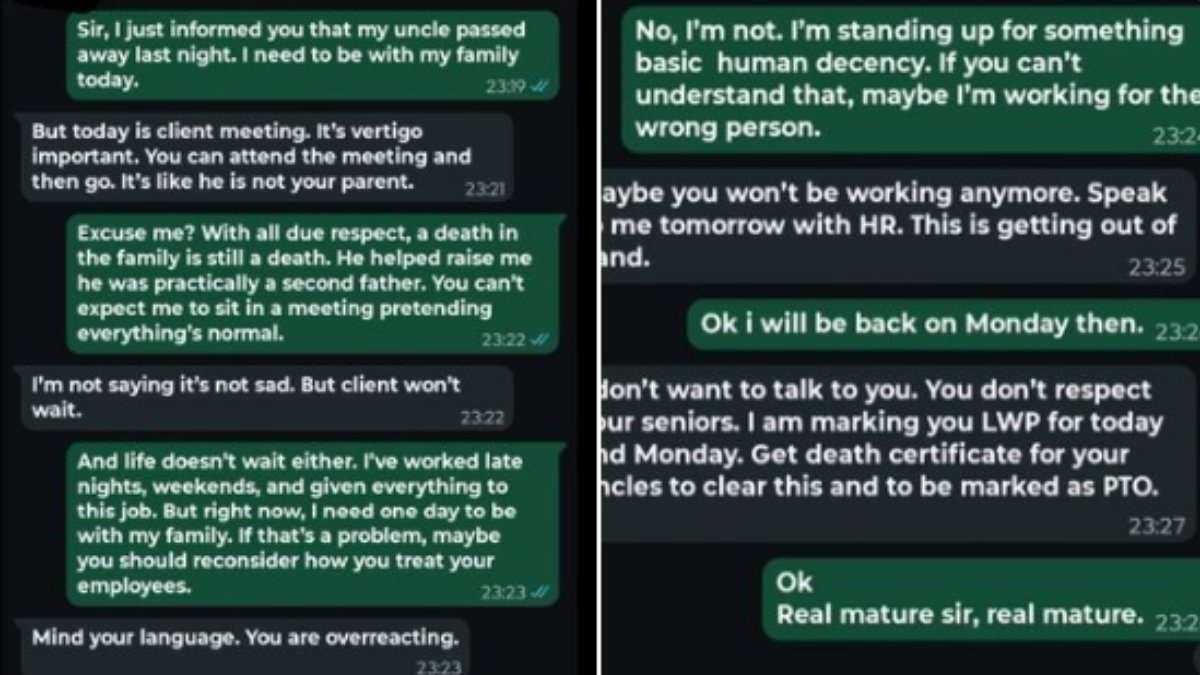
A young employee informed his manager that his uncle had passed away and that he needed leave to be with his family. According to the viral screenshot shared online, the conversation began when the employee texted: “My uncle has just passed away. I need to go home immediately.”
Instead of acknowledging the loss, the manager redirected the discussion to work obligations. The reply shared in the screenshot read: “We have an important client meeting today. Attend the meeting first, then you can take leave.”
What followed became the core of the nationwide reaction.
The employee pushed back, telling the manager: “Death is a death. I can’t sit in a meeting pretending everything is normal.”
He added that the uncle was like a second father to him and that attending a business call during last rites was not an option.
The disagreement escalated when the manager allegedly responded with: “You are overreacting. Attend the meeting. This is work.”
The employee refused and responded firmly: “I’m asking for one day of leave for a genuine reason. If this is considered overreacting, maybe I’m working for the wrong person.”
The manager then warned him that the day would be marked as leave without pay and insisted that future requests would require a death certificate.
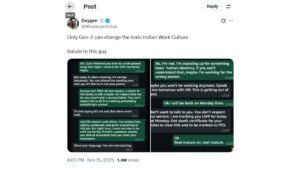
The screenshot of the chat was later posted on social media platform X, where millions viewed and reshared it within hours. Many users labelled the employee’s reply as a moment of cultural shift inside Indian workplaces.
The Reason This Screenshot Became a Talking Point
The story is receiving wide attention because it captures a growing clash between older workplace norms and the expectations of younger employees.
Readers are engaging with this story because it raises clear, practical questions:
- What counts as acceptable behaviour from managers during personal emergencies?
- Why do some workplaces still treat leave as a favour instead of a right?
- How should HR teams respond when personal grief meets rigid internal policies?
- And most importantly, where does “employee rights” stand in real-life crisis situations?
The viral post resonated because the employee did not remain silent. The directness of “Death is a death” struck a chord with thousands who said they had experienced similar responses from their superiors.
This incident is trending not because it is dramatic but because it is familiar.
Public response
Comments on the viral post show a large section of the workforce identifying with the situation. Many wrote that they had witnessed managers dismissing genuine family emergencies as “inconveniences.” Others criticised leave systems where employees must negotiate for basic human needs.
Several reactions questioned the logic behind demanding documents during moments of loss. Users pointed out that proving death is an insensitive practice, especially when immediate attention is required at home.
A recurring theme across comments was frustration with outdated HR structures. Many felt that companies talk about empathy and mental health but do not practise these values when it matters.
Readers repeatedly asked:
- Why do companies say “family comes first” but behave differently in practice?
- Why is bereavement treated as a compliance issue instead of a compassionate one?
The incident has pushed HR leaders, founders and corporate teams to revisit how their policies look in real situations rather than on paper.
Generational differences shaping workplace culture
The strongest conversation emerging from this incident is how younger employees approach workplace boundaries.
Gen Z workers are widely recognised for prioritising mental well-being, balanced living and direct communication. They are less likely to accept disrespect from managers and more comfortable asserting limits without fear of judgement.
Older workplace cultures often expected silence, obedience and sacrifice during personal difficulties. This incident shows how rapidly that expectation is changing.
Across online comments, many praised the employee for holding a line that earlier generations rarely drew.
Statements like “Only Gen Z can change this work culture” circulated widely because they represent a shift in what employees consider acceptable.
Readers want to know if this cultural shift is temporary or permanent. The increasing number of similar incidents suggests it is not a momentary reaction but a long-term change in how workplaces will function.
What Experts Say About the Policy Failures
Several HR professionals who joined the online discussion said that companies must re-evaluate how managers handle grief-related situations.
They identified three immediate areas where organisations need introspection:
1. Lack of standardised bereavement leave
Many firms in India still do not have clear bereavement leave policies. Some leave such decisions entirely to managers, resulting in inconsistent and sometimes insensitive outcomes.
2. Poor managerial training
Managers often treat leave requests as operational disruptions rather than human moments. Experts argue that leadership training must include guidance on grief response and crisis communication.
3. Misalignment between policy and practice
Even when HR policies exist, employees report that they are applied selectively or used as tools of control rather than support.
Readers are questioning whether HR teams are empowered enough to implement humane practices or if rigid reporting hierarchies limit their authority.
Why this story is relevant for employees and employers
The trending screenshot has triggered conversations not just about one employee’s situation but about how workplaces should function in moments of loss.
The core questions now being discussed include:
- Should employees have to “prove” grief to get basic leave sanctioned?
- Should managers prioritise client meetings or the emotional well-being of their team?
- Should HR intervene proactively when such conflicts arise?
- And do current policies reflect modern expectations of dignity and balance?
This story matters because it is not about a viral chat — it is about a structural expectation that grief can be postponed.
Employee rights becoming non-negotiable
The incident highlights a growing expectation that employee rights should include respect, compassion, and humane decision-making, especially during personal emergencies.
Readers are responding strongly because they recognise this as a moment where corporate culture is being redefined.
Gen Z is pushing this change, but the impact extends to all generations who want workplaces where dignity is not optional.
This story is trending because it forces companies to look at something simple but long ignored:
People grieving a death should not have to negotiate their right to leave.
Catch big news and top news headlines with the latest news updates. Quirk Report delivers trusted stories from India and around the world.
Follow Quirk Report on Instagram, Twitter(X) and Facebook.