



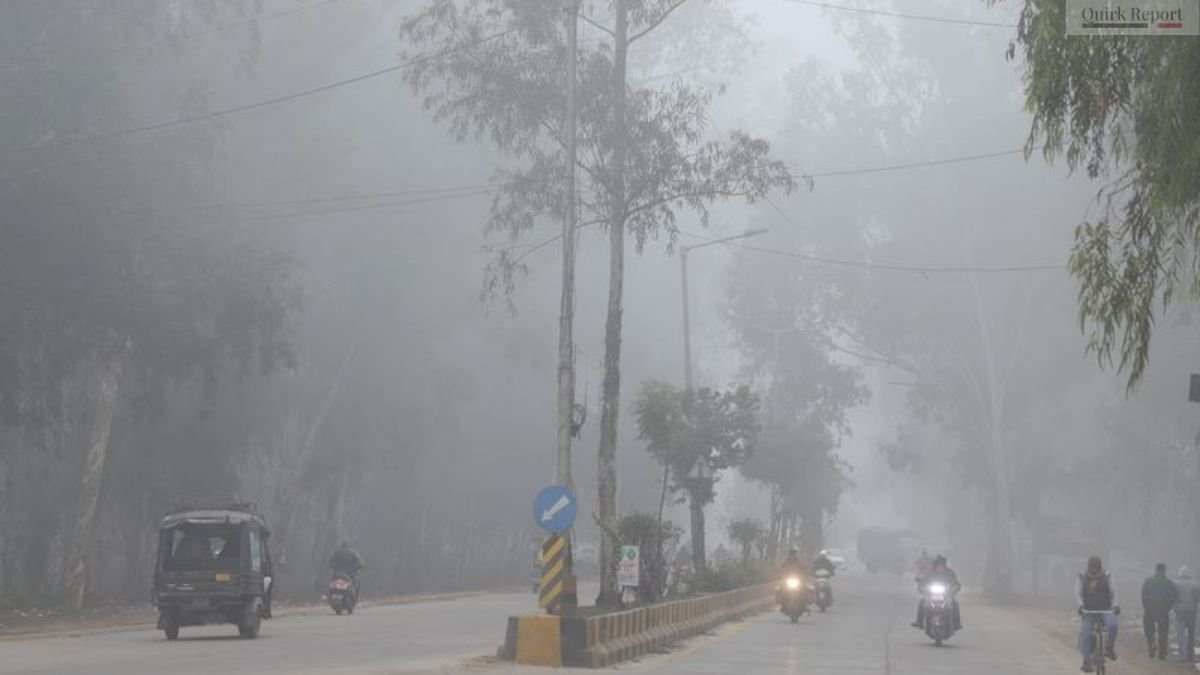
Northern India experienced severe cold wave conditions on Wednesday, with temperatures plummeting across several states. Today’s atmosphere in Delhi offered a modest reprieve from the biting chill that has gripped neighboring Punjab, Haryana and Kashmir, where several water bodies remain frozen and residents continue to battle freezing conditions that show no signs of abating.
The national capital recorded a maximum temperature of 20 degrees Celsius, marginally above the seasonal average by just 0.1 degrees, while the minimum settled at 3.8 degrees Celsius, remaining 3.6 degrees below normal levels. Despite this slight improvement compared to surrounding regions, Delhi weather remains notably cold, with the India Meteorological Department issuing a yellow alert warning residents to brace for continued cold wave conditions through Thursday. Meteorologists predict temperatures will range between 5 degrees Celsius and 22 degrees Celsius in the coming days, with cold wave conditions expected to persist throughout the capital.
The relatively milder conditions in the national capital stand in stark contrast to the brutal cold affecting millions across northern states. While Delhi residents experienced some relief, the cold in Delhi continues to impact daily life, particularly during early morning and late evening hours when temperatures dip significantly. The meteorological department has cautioned residents about potential frost formation at isolated locations during the overnight period.
Today’s atmosphere in Delhi contrasts sharply with Punjab, Haryana freeze
The Delhi’s weather appears almost comfortable when compared to conditions in neighboring states. Haryana witnessed brutal cold throughout Wednesday, with Hisar recording an alarming night temperature of just 0.5 degrees Celsius—six notches below the normal range. The state capital Chandigarh experienced dramatic daytime conditions, with temperatures plunging to 8.9 degrees Celsius during peak afternoon hours, a full ten degrees below the seasonal norm.
Other cities in Haryana faced equally severe conditions. Ambala registered a maximum of just 9 degrees Celsius, nine notches below normal, while Karnal recorded 10.2 degrees Celsius, down by eight degrees. Hisar’s daytime temperature reached only 13.2 degrees Celsius, seven degrees below average. The minimum temperatures across the state painted an even grimmer picture, with Narnaul recording 1 degree Celsius and Bhiwani at 1.2 degrees Celsius. Gurugram residents woke to 3.5 degrees Celsius, while Faridabad, Karnal, and Rohtak all recorded temperatures hovering around 3 to 4 degrees Celsius.
Punjab experienced similar harsh conditions that disrupted normal life across the state. Hoshiarpur’s maximum temperature dipped to 8.4 degrees Celsius, nine degrees below average, making it one of the coldest locations during daylight hours. Major cities including Amritsar, Patiala, Ludhiana and Gurdaspur faced severe cold during the day, with maximum temperatures ranging between 8.8 and 11 degrees Celsius—all significantly below normal levels. Bathinda and Faridkot recorded nighttime lows of 3.2 degrees Celsius, forcing residents to remain indoors and disrupting normal daily activities. Other cities including Gurdaspur, Amritsar, Ludhiana, Patiala, Hoshiarpur, and Mansa recorded minimum temperatures between 3.2 and 5.6 degrees Celsius.
Kashmir freezes as Chilla-i-Kalan intensifies
Kashmir Valley remained firmly in the grip of ‘Chilla-i-Kalan,’ the forty-day period of harshest winter that began December 21 and extends until January 30. This traditional period marks the time when snowfall is most likely and cold wave conditions reach their peak intensity. Delhi temperature readings appear mild compared to Kashmir, where parts of the famous Dal Lake and numerous other water bodies have completely frozen over, creating stunning yet challenging conditions for residents.
Srinagar recorded a bone-chilling minus 5.2 degrees Celsius on Tuesday night, slightly colder than the previous night’s minus 4.9 degrees Celsius. Shopian in southern Kashmir emerged as the coldest location at minus 7.5 degrees Celsius, while Pahalgam tourist resort recorded minus 6 degrees Celsius. The ski resort of Gulmarg registered minus 3.8 degrees Celsius, while Sonamarg in central Kashmir experienced minus 2.2 degrees Celsius. Qazigund recorded minus 5.3 degrees Celsius, Kokernag minus 2.3 degrees Celsius, and Kupwara minus 6.2 degrees Celsius, indicating widespread severe cold across the entire valley region.
The India Temperature patterns indicate this winter remains significantly colder than previous years, with maximum daytime readings dropping nearly ten degrees below normal in several locations across the northern belt. Weather officials project Delhi’s weather will gradually stabilize over the coming week, though residents should remain prepared for continued cold conditions. The meteorological department has advised people to take necessary precautions, wear warm clothing, and avoid prolonged exposure during early morning and late evening hours when temperatures are at their lowest.