




LATEST NEWS:-
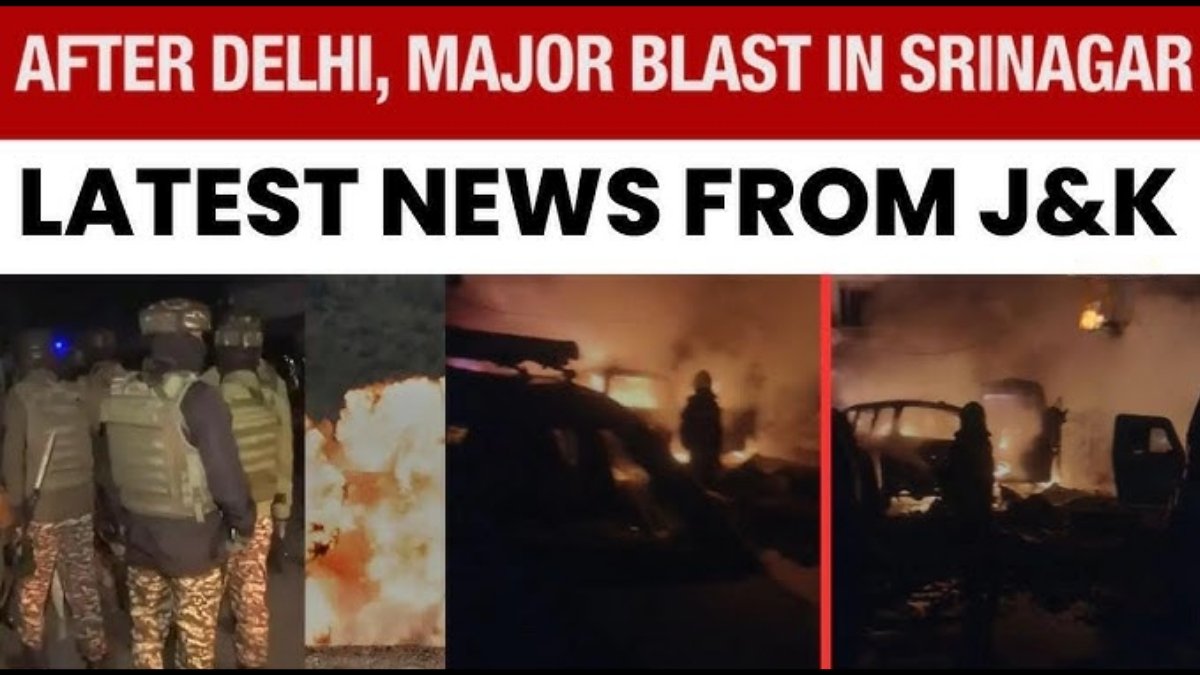
The Srinagar blast at Nowgam Police Station killed 9 people and injured 32 during an examination of explosive materials linked to the Red Fort case. The incident raises new security questions in Jammu and Kashmir.
What happened in Nowgam Police Station
The Srinagar blast took place around 11.20 at night inside Nowgam Police Station when police teams and forensic experts were examining seized explosive materials. These materials had been brought from Faridabad after a major recovery operation earlier in November.
The chemicals included ammonium nitrate, potassium nitrate and sulfur. The total weight of the recovered materials was around 360 kilograms. These chemicals were being studied to understand their connection with the Red Fort car explosion case from Delhi.
A sudden reaction in the material triggered the blast. The impact was strong enough to damage the building, crack walls and destroy vehicles parked inside. Smaller blasts continued inside the compound for some time, slowing down rescue efforts. The incident created panic in nearby areas as people first assumed it was another terror attack.
The Srinagar blast is now one of the most serious incidents reported in recent srinagar news updates.
Why the explosives were under examination
The explosive materials were seized from Faridabad on 9 and 10 November. Investigators had linked these materials to a suspected Jammu Kashmir terror attack network that involved educated professionals. Some were medical practitioners. Some were linked to Al Falah University in Faridabad. This group was suspected of arranging chemicals, providing logistics and helping in transportation across different states.
The seized materials matched the chemical pattern used in the Red Fort car explosion case that killed 13 people in Delhi. Because of this similarity, the chemicals were brought to Srinagar for deeper technical examination.
Officials have stated that the teams were following safety steps but the nature of the chemicals was unstable. Only a detailed forensic study can confirm what triggered the blast. Investigators are now checking whether the material was mixed incorrectly or whether a hidden reaction began while samples were being extracted.
Loss of officers and experts
The Srinagar blast killed 9 people. These included one member of the Special Investigation Agency, three members of the forensic science team, two crime scene photographers, two revenue officials and one civilian who was assisting the team.
Another 32 people were injured. Among them were 27 police personnel, two revenue officials and three civilians who lived near the police station. Many suffered burns and injuries caused by falling concrete and metal fragments.
This loss is a major setback. Forensic teams play an important role in identifying the strength and composition of explosive materials. Their absence will affect the progress of the investigation. Families of the victims have demanded clarity on why such dangerous materials were kept inside an active police station instead of a controlled testing area.
This has become a key concern in current srinagar news discussions as people seek answers on handling procedures and safety lapses.
What the investigation will focus on now
The National Investigation Agency has taken charge of the case. The area around Nowgam Police Station has been sealed. Teams from Jammu and Kashmir Police, the Special Investigation Agency and central forensic experts are studying every detail left after the explosion.
The Srinagar blast also affects the larger probe into the Jammu Kashmir terror attack network suspected of planning more strikes. With the explosives destroyed in the blast, investigators will depend on earlier photographs, notes and smaller samples collected before the explosion.
Officials have urged the public to avoid speculation. They have stressed that the focus now is on identifying the full network behind the chemicals, tracing the source of the materials and finding out whether more dangerous stockpiles exist in other states.
Security across Jammu and Kashmir has been tightened. Police stations and checkpoints have been told to follow strict handling protocols. More training for officers is expected soon.
The Srinagar blast has highlighted the risk of dealing with unknown explosive materials. It has also shown how terror networks can use educated individuals and professional positions to support dangerous plans. The investigation will continue for several weeks and more updates will follow as agencies uncover new information.
Catch big news and top news headlines with the latest news updates. Quirk Report delivers trusted stories from India and around the world.
Follow Quirk Report on Instagram, Twitter(X) and Facebook.