



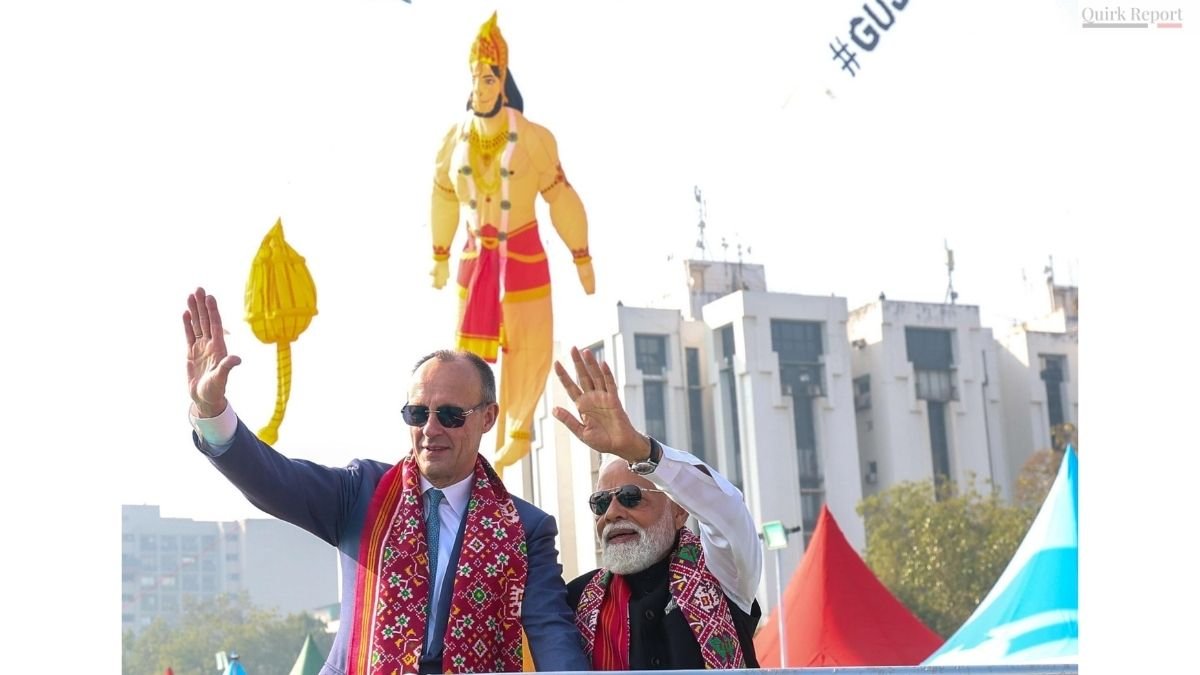
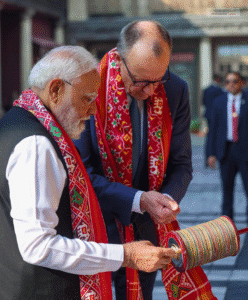
PM Modi welcomed German Chancellor Friedrich Merz to the International Kite Festival at Sabarmati Riverfront in Ahmedabad on Monday, January 12, 2026, turning a diplomatic visit into a cultural moment marked by kite flying, symbolic displays, and public interaction. The two leaders were seen holding spools and guiding kites together, using the traditional festival setting to highlight cultural diplomacy alongside bilateral engagement.
The Ahmedabad event unfolded on the banks of the Sabarmati, where large crowds and festival participants watched as PM Narendra Modi introduced the visiting German Chancellor to India’s kite flying tradition. The moment quickly became a visual highlight of Merz’s first visit to India, with photos capturing Modi explaining how to control the thread and adjust to the wind while Merz followed along.
Beyond the optics, the choice of venue and activity sent a deliberate message. Instead of restricting the visit to closed-door meetings, the leaders stepped into a public cultural space, blending diplomacy with everyday Indian tradition. The International Kite Festival, a major draw during Uttarayan in Gujarat, offered a backdrop that connected heritage with contemporary statecraft.
When PM Modi Taught German Chancellor Merz the Art of Kite Flying
At the Sabarmati Riverfront, PM Modi and the German Chancellor stood among festival organisers and local participants, taking turns to fly kites and observe the sky filled with colourful designs. Prime Minister Modi was seen guiding Merz on basic techniques, from releasing the line to maintaining balance against shifting winds, turning the interaction into a simple but telling exchange of traditions.
For Gujarat, kite flying is not a staged performance but a living practice linked to community gatherings and seasonal change. By choosing this setting, PM Modi in Ahmedabad presented culture not as a display item but as a shared experience. The German Chancellor’s participation reflected a willingness to engage beyond protocol, reinforcing the idea that cultural understanding plays a role in modern diplomacy.
The International Kite Festival also attracts international teams and tourists, making it a natural platform to highlight Gujarat tourism and India’s cultural heritage. Officials present at the Ahmedabad event noted that such interactions help foreign leaders see how traditions remain part of daily public life, not limited to museums or formal ceremonies.
The teaching moment also added a human layer to the diplomatic schedule. Instead of formal speeches, the image of a prime minister acting as instructor and a visiting leader as learner conveyed ease and openness. For first-time visitors like Merz, this kind of interaction often leaves a stronger impression than official receptions alone.
View this post on Instagram
Symbolic Kites and the Message of Cultural Confidence
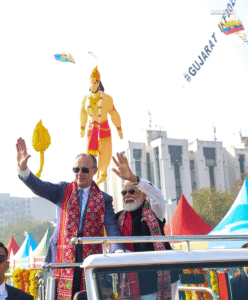
What drew equal attention were the symbolic kites released during the event. Among them were kites depicting Operation Sindoor, Lord Hanuman, and the Tricolour, each chosen to reflect different aspects of India’s identity. Together, they represented military resolve, spiritual heritage, and national pride, framing the festival as more than entertainment.
The Operation Sindoor kite was interpreted as a nod to India’s security stance and strategic readiness, while the Lord Hanuman kite pointed to spiritual prowess rooted in civilisational traditions. The Tricolour, rising above the crowd, underscored national unity and confidence. Seen together, the symbolic kites linked tradition with contemporary national narrative.
BJP leader Amit Malviya described the moment as more than a diplomatic gesture, calling it a reflection of India’s “civilisational spirit” shared openly and without hesitation. He added that the country now presents its traditions “unapologetically and proudly,” from faith and festivals to national resolve, as part of its global partnerships.
The timing of the festival appearance also mattered. The kite flying preceded formal bilateral discussions scheduled later in the visit, setting a tone that cultural exchange and political dialogue move together. For India-Germany relations, the sequence highlighted that cooperation is built not only through policy but also through people and shared experiences.
Merz’s visit comes at a phase when both countries are expanding cooperation in trade, technology, and climate initiatives. Cultural diplomacy, as seen at the Ahmedabad event, adds a softer layer to these engagements, helping leaders connect public sentiment with strategic objectives. It also signals that India’s traditions remain central to how it introduces itself on the world stage.
As the kites settled back to the ground and the leaders moved on to official meetings, the images from Sabarmati Riverfront continued to circulate, capturing a blend of tradition and statecraft. PM Modi’s choice to begin the German Chancellor’s visit with kite flying sent a clear message: India’s cultural confidence is not separate from its diplomacy, it is part of how the country builds global partnerships today.
Catch more trending news on Quirkreport.