



In a major development that has dominated viral news cycles across social platforms, a 7.6-magnitude earthquake struck the northeastern region of Japan late Monday night, triggering tsunami warnings and pushing thousands to evacuate. Moments after the tremors hit, japan viral video posts and mobile recordings flooded the internet, turning raw on-ground visuals into global talking points. These japan earthquake viral video clips, taken by residents and CCTV cameras, are now shaping early global perception of the disaster.
The Quake and Immediate Response
According to initial assessments from Japan’s meteorological authorities, the earthquake hit offshore near the eastern side of Aomori Prefecture, close to the northern coastline of Honshu. The depth and positioning of the tremor created intense shaking across multiple towns, with peak intensity readings that made it difficult for residents to stand or move without support.
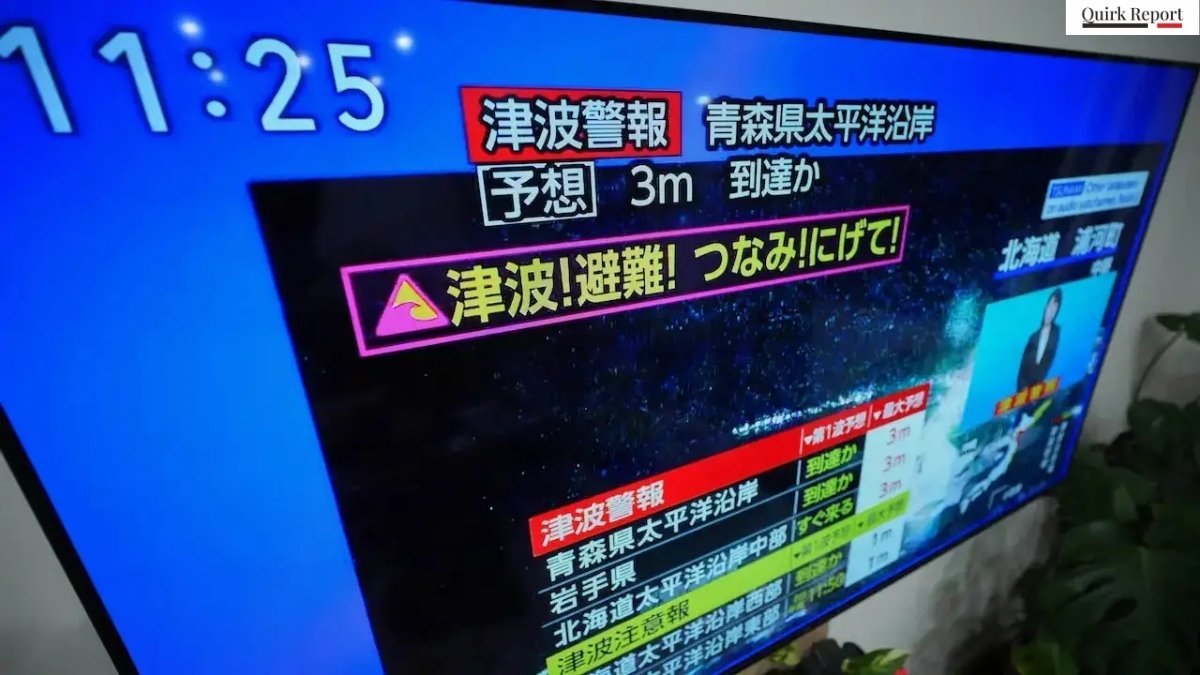
Local authorities moved quickly. Tsunami warnings were immediately issued for multiple coastal zones, with advisory messages urging people in low-lying areas to rush to higher ground or move to government-designated shelters. Sirens, emergency broadcasts, and mobile notifications were triggered simultaneously — creating a chaotic but controlled evacuation pattern across coastal communities.
By early reports, tsunami surges were detected at several observation points, though wave heights remained moderate in most regions. Emergency teams were dispatched to inspect ports, sea walls, and vulnerable structures.
Viral Clips Show the Intensity Inside Homes and Public Spaces
Within minutes, the digital impact of the earthquake began spreading faster than official statements. Residents posted shaky recordings, CCTV footage, and dashcam videos capturing the exact moment the quake rattled buildings.
These viral clips show ceiling fixtures swinging violently, glass rattling, shelves collapsing, and people instinctively ducking under tables. In several videos, a loud emergency alert can be heard sounding through smartphones before the shaking intensifies — a common feature of Japan’s early warning system.
One widely shared japan viral video shows commuters at a train station gripping handrails as the ground beneath them moves in sharp jolts. Another japan earthquake viral video recorded inside a supermarket shows products falling from shelves as alarms go off. Such videos have been shared, reposted, analyzed frame-by-frame, and discussed extensively, turning the moment into a major narrative under the World News category globally.
Residents featured in these recordings described the shaking as “long, strong, and unsettling,” with several reporting that they struggled to stay balanced as floors vibrated intensely.
Injuries, Disruptions, and Structural Damage
Early reports indicate dozens of injuries, most linked to falling objects, broken glass, or sudden movement during evacuation. Hospitals in the affected prefectures treated people for cuts, sprains, and fractures.
Public transport services across northern Japan were halted as a precaution. High-speed trains were stopped, and local networks paused operations for structural inspections. Power outages were recorded in several districts, with repair teams working through the night to restore supply.
Authorities emphasized that critical infrastructure, including major bridges, tunnels, and dams, underwent rapid inspections. No large-scale structural collapse was reported in the first few hours, but many public buildings and older homes suffered moderate damage, including cracked walls, fallen chimneys, and broken windows.
Why the Quake Triggered a Large Reaction Online
Japan is no stranger to seismic activity, but this earthquake captured global attention for two reasons: its magnitude and the volume of real-time digital documentation. The viral news coverage has been driven by firsthand visuals rather than traditional reports.
Three major factors amplified online traction:
1. High-magnitude event near populated zones
A 7+ magnitude quake hitting close to residential and commercial districts naturally generates large concern, especially because northern Honshu and Hokkaido have seen destructive quakes in the past.
2. Immediate spread of videos
The earthquake occurred at a time when many residents were awake and online, making it easy to record and share. Within minutes, thousands of people worldwide were viewing japan viral video posts.
3. Tsunami alert heightening tension
Even though later assessments recorded smaller waves, the initial warning projected up to three-meter surges, creating global anxiety and driving search traffic under World News categories.
Expert Obse
🚨 BREAKING: A massive 7.6 magnitude earthquake has struck near Japan. Tsunami warning issued.#Japan #earthquake #Tsunami pic.twitter.com/LMTIOttlhz
— TRIDENT (@TridentxIN) December 8, 2025
rvations and Ongoing Risks
Seismologists have stated that the quake resulted from tectonic activities along the Japan Trench, a region known for frequent and sometimes severe seismic movements. Experts have warned of aftershocks over the next several days, urging residents to remain prepared.
Tsunami advisories were gradually reduced but not fully dismissed in the initial hours. Authorities stressed that even a moderate surge can be dangerous in specific coastal configurations.
Infrastructure experts have highlighted the importance of monitoring older buildings, as even moderate structural damage can worsen during aftershocks.
How Viral Clips Influence Disaster Understanding
The influx of viral clips has shaped global reaction to the earthquake faster than official updates. While these videos offer powerful, authentic insight, they also come with challenges. Some clips circulating online are mislabelled or taken from earlier disasters, creating confusion.
Disaster response officials have urged the public to rely on verified government channels for safety information. At the same time, they acknowledged that eyewitness footage helps the world understand the scale of the event.
The spread of japan earthquake viral video compilations has also renewed conversations about Japan’s disaster preparedness, early-warning systems, and building regulations — areas where the country is often held as a global benchmark.
A Nation That Remains Prepared — and Watched by the World
As Japan evaluates the full extent of damage and works to restore normalcy, global attention remains fixed on updates. The earthquake’s impact, though serious, appears to have been mitigated by strong preparedness measures, advanced warning systems, and quick response from authorities.
Yet the digital footprint of the event — the sudden surge of viral news, the wave of japan viral video posts, and the intense sharing of viral clips — ensures this moment will remain a major point of analysis in global disaster reporting.