




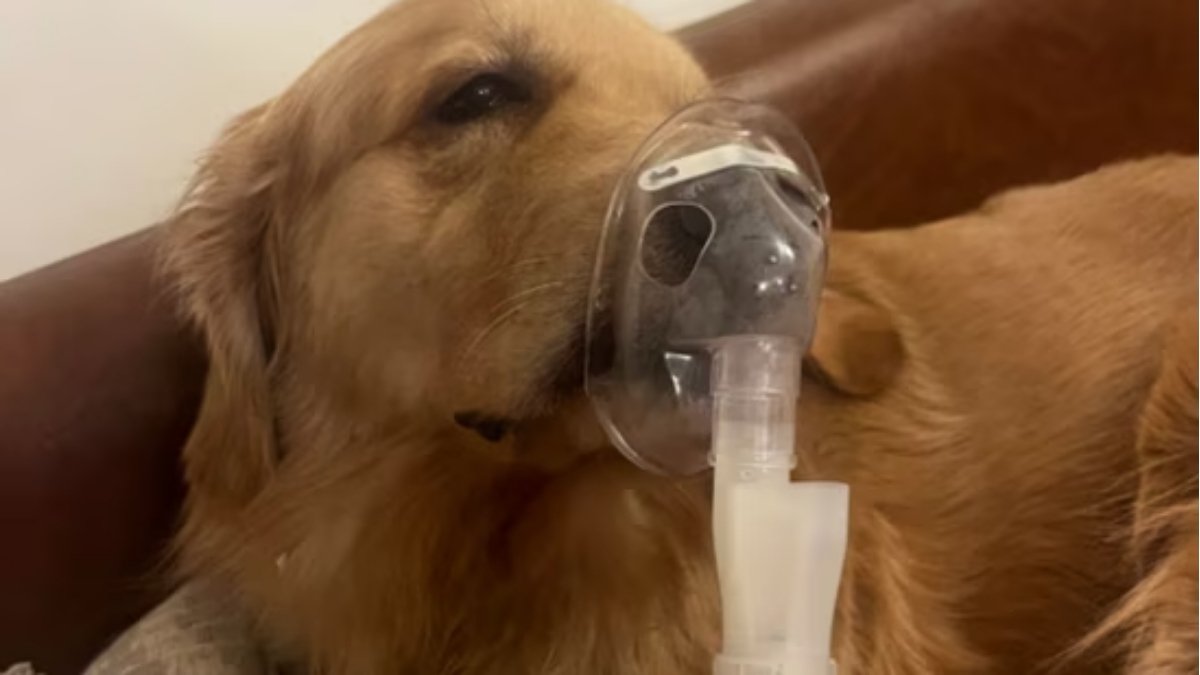
A viral image of a golden retriever sitting calmly with a nebuliser strapped to its face has triggered serious concern across social media. The dog, living in Delhi, was reportedly diagnosed with bronchitis — a condition its owner believes is directly linked to Delhi air pollution. What made this story powerful wasn’t emotion, but reality. A healthy pet developing respiratory disease simply by breathing the city’s air is hard to ignore.
The photo spread rapidly across platforms and turned into a viral flashpoint, not because of sentiment, but because it exposed the daily health cost of living in extreme pollution. This case highlighted what many Delhi residents have been experiencing for years: worsening health effects from constant exposure to Delhi smog.
Animals don’t smoke, don’t work in factories, don’t contribute to emissions — yet they are suffering. That fact alone makes this story impossible to dismiss.
How Delhi Air Pollution Is Making Pets Sick
Veterinary clinics across the capital have reported a steady rise in respiratory cases in dogs and cats. Vets are seeing more cases of coughing, wheezing, nasal discharge, laboured breathing, and fatigue — symptoms that closely match human reactions to toxic air. Long-haired and large-breed dogs, such as the golden retriever, are especially vulnerable.
The problem becomes worse because dogs breathe closer to the ground, where heavier air pollutants tend to settle. This makes Delhi air pollution more dangerous for them than for humans in some conditions. Unlike people, pets can’t wear masks, avoid polluted zones on their own, or understand exposure risks. They rely completely on their owners for protection.
The growing blanket of Delhi smog traps toxic particles in the air, increasing the concentration of harmful substances. When these particles enter the lungs, they cause inflammation, irritation, and long-term respiratory damage.
This case didn’t shock people because it was rare. It shocked them because it was relatable.
Delhi AQI at Dangerous Levels
The Delhi AQI has become a daily warning sign rather than an occasional alert. During winter months, low wind speed and falling temperatures create a toxic atmospheric layer that prevents pollutants from dispersing. This traps harmful particles over the city for days or weeks.
When the Delhi AQI crosses into “very poor” or “severe” levels, even brief outdoor exposure becomes dangerous. Children, elderly people, and now animals are showing visible health effects.
This golden retriever’s bronchitis is not an isolated medical issue. It is a physical symptom of a city breathing poisoned air.
Public behaviour has started to change. Schools have restricted outdoor activity. Offices recommend work from home. But pets still need to be walked, still go outside, and still inhale toxic air.
That gap in protection is costing their health.
Why This Viral Photo Changed the Conversation
The reason this image went viral is simple: it showed pollution damage in a way statistics cannot. A machine helping a dog breathe because the air is unsafe delivered a message stronger than any scientific report.
People reacted strongly because the image stripped away deniability. When a beloved pet struggles to breathe, pollution becomes personal.
Many users shared similar stories after the photo surfaced. Some spoke about family members developing chronic coughs. Others talked about birds and pets becoming restless, tired, or sick. This wasn’t sympathy-driven engagement — it was recognition.
The story forced people to face what they had normalised.
What Pet Owners in Delhi Should Do Immediately
This isn’t about awareness anymore. It’s about survival-level precautions.
Pet owners in high pollution zones should:
- Avoid outdoor walks during peak pollution hours
- Check Delhi AQI levels before stepping outside
- Use indoor air purifiers to reduce toxic particles
- Clean pet paws and fur after outdoor exposure
- Watch for warning signs like coughing, lethargy or reduced appetite
These are not luxury measures. These are basic safety practices in extreme Delhi air pollution conditions.
Ignoring these risks is not just careless — it’s dangerous.
More Than a Viral Moment
This was never just a story about a golden retriever and a nebuliser.
It became a symbol of how deeply Delhi air pollution has penetrated everyday life. When a pet needs medical breathing support because the air is unfit, the issue is no longer abstract.
This incident did not go viral because it was cute or dramatic.
It went viral because it was real.
And it showed exactly how serious the situation has become.
Catch big news and top headlines with the latest news updates. Quirk Report delivers trusted stories from India and around the world.
Follow Quirk Report on Instagram, Twitter(X) and Facebook.