




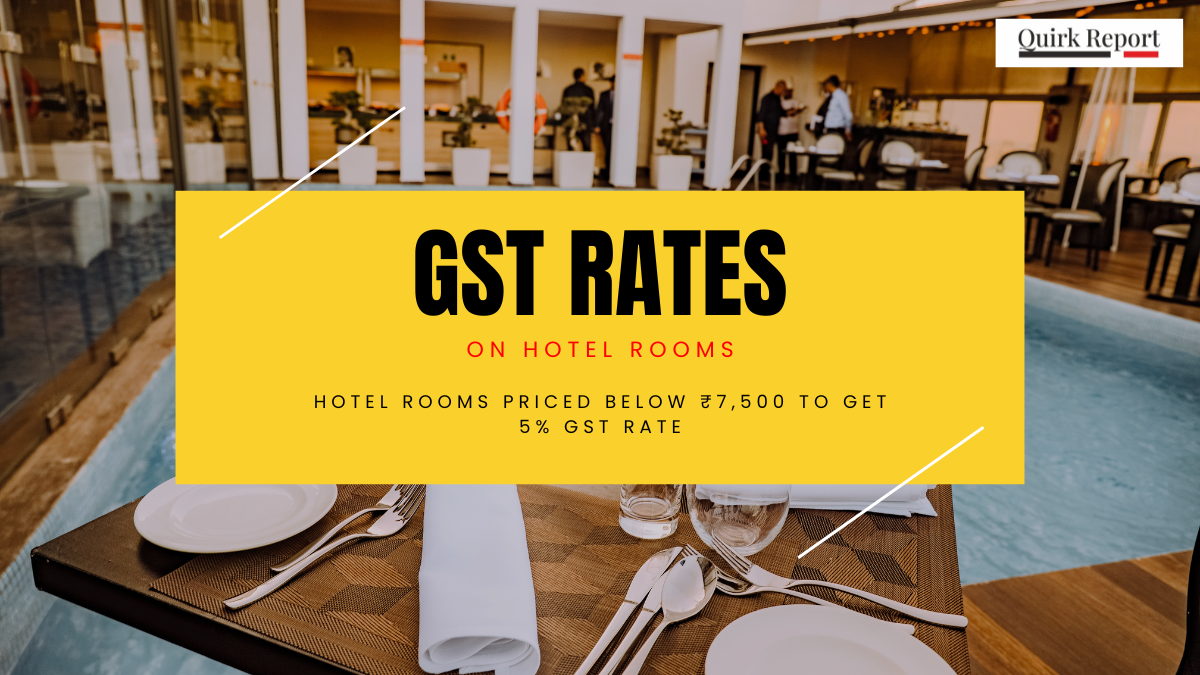
In a major development in business news, the Goods and Services Tax (GST) Council has decided to cut the tax rate on hotel rooms priced up to ₹7,500 per night. From September 22, 2025, such rooms will attract 5 percent GST without input tax credit (ITC), compared to the earlier 12 percent with ITC.
The move is expected to make travel more affordable and help mid-scale and budget properties across the country. For travelers searching for the best hotel deals, the change promises lower tariffs and improved affordability. The reform also comes at a crucial time for the hospitality sector, which is looking to sustain recovery and attract more demand.
Cheaper Accommodation Across Indian Hotels
The revised rate will apply to all Indian hotels offering rooms within the ₹7,500 tariff limit. These hotels make up a large share of the domestic travel market, covering both business and leisure segments.
For instance, a room priced at ₹6,000 currently draws ₹720 in GST, taking the bill to ₹6,720. After the cut, GST will be ₹300, bringing the total down to ₹6,300. This direct reduction in costs is expected to draw more guests, particularly in cities where mid-range hotels dominate.
Travelers following GST news closely see this as an opportunity to explore destinations with better savings. It also opens doors for families and professionals who earlier avoided longer stays due to high tax components.
Booking Terms and Conditions
Officials clarified that the 5 percent GST will apply only if guests pay at check-in. Prepaid bookings, even if made for stays after September 22, will continue to attract the 12 percent rate.
This detail has become a key talking point in business news and among travel agencies. Operators are advising customers to confirm payment terms to benefit from the reduced tax. Experts also believe this change may shift booking patterns, as travelers wait until check-in to make payments and secure the lower rate.
Industry Reaction to GST Cut
The hospitality industry has largely welcomed the decision. Many chains and independent operators expect occupancy levels to rise, particularly in Indian hotels catering to the mid-market. Some estimates suggest revenues could grow between 7 and 10 percent in the months following the reform.
“Reducing GST to 5 percent will enhance affordability and improve competitiveness,” a hotelier said. “This will bring more travelers into the mid-market segment, giving momentum to the industry during the festive season.”
However, there are concerns. The removal of ITC means hotels cannot claim tax credits on inputs such as utilities and services, potentially raising operating costs. Several hotel associations had also urged the council to raise the ₹7,500 cap, saying inflation has already pushed average tariffs higher in urban centers.
Despite these reservations, the broader sentiment is positive. The decision features prominently in current GST news as one of the most impactful changes for the tourism sector.
Impact on Travelers
For travelers, the direct benefit lies in reduced bills. A family booking two rooms for a three-night stay at ₹6,000 per night could save over ₹2,500 under the revised GST structure.
The reform also makes best hotel deals more attractive. Travel platforms are already reporting increased searches for hotels within the new bracket. With the festive season approaching, industry experts expect higher bookings in destinations ranging from metro cities to tier-2 and tier-3 towns.
For frequent business travelers, the new rate structure allows greater flexibility in choosing Indian hotels within company budgets. Industry watchers say this will further stimulate corporate travel, which is essential for overall sector growth.
Wider GST Reforms
The cut in hotel room tax is part of a broader restructuring of slabs announced by the council. From September 22, most goods and services will fall into simplified categories of 5 percent, 18 percent, or 40 percent.
The hospitality sector, highlighted in recent business news, is among the main beneficiaries. Alongside hotels, airlines and entertainment services have also seen adjustments. Officials noted that the reforms are designed to make travel, accommodation, and leisure more affordable while supporting consumption-led growth.
Economists tracking GST news believe the changes will benefit both consumers and industries that rely heavily on domestic demand. For the government, the simplified structure is also expected to ease compliance and improve tax collections.
Business News Outlook
The GST rate cut on hotels is expected to trigger multiple benefits. Travelers will save money on stays, hotels will see higher occupancy, and allied sectors such as transport and food services will benefit from increased tourism.
For those tracking business news, the decision underscores the government’s focus on stimulating growth through consumer-friendly tax measures. It also signals that the hospitality industry is central to the broader economic strategy ahead of the festive season.
At the same time, the debate over ITC and tariff thresholds will likely continue, as hotel operators seek further reforms to support long-term expansion. Until then, the current rate cut provides immediate relief to travelers and mid-market hotels.
Key Highlights
- New Rate: 5% GST without ITC on hotel rooms up to ₹7,500 per night.
- Earlier Rate: 12% GST with ITC.
- Effective Date: September 22, 2025.
- Booking Rule: Applies only on payments made at check-in.
- Traveler Advantage: Reduced costs and better chances of finding the best hotel deals.
- Industry Impact: 7–10% revenue growth expected in Indian hotels within the mid-market.
- Concerns: Loss of ITC and static tariff threshold despite inflation.