



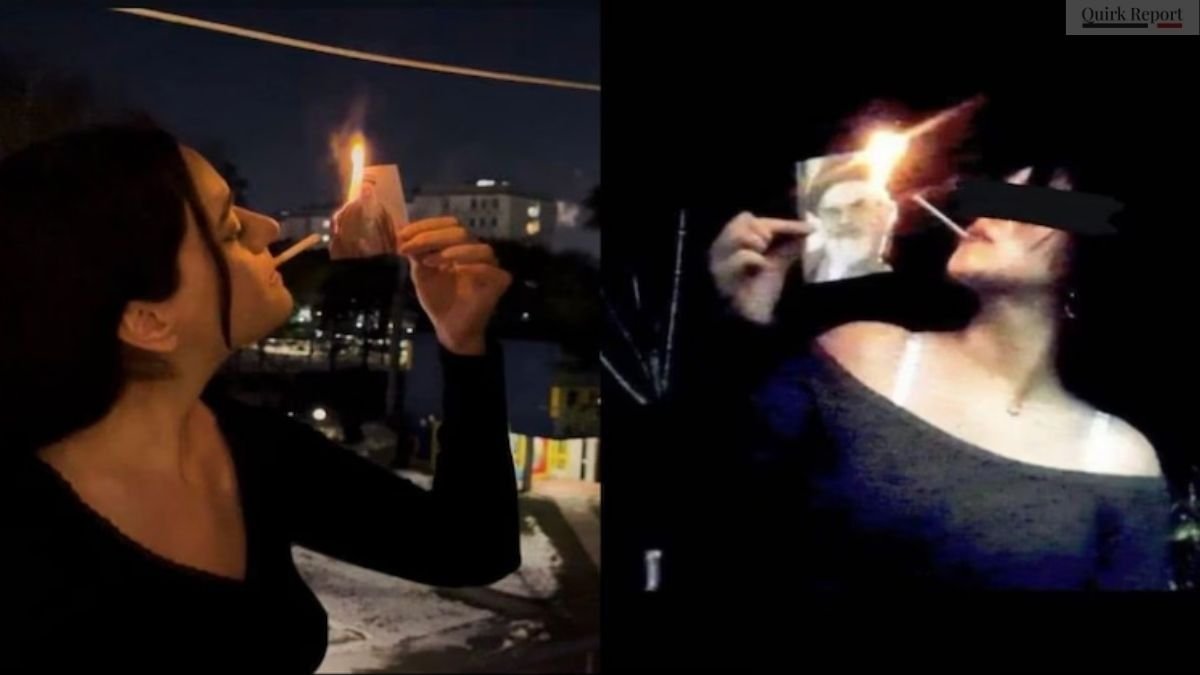
A new wave of protest imagery from Iran is drawing international attention after videos and photos surfaced showing women lighting cigarettes using burning pictures of the country’s Supreme Leader(Ayatollah Ali Khamenei). The visuals have spread quickly across social media and are being widely shared as a form of symbolic resistance. While the act itself takes only seconds, the message behind it reflects deep public frustration and long-standing anger toward political and social restrictions in the country.
In Iran, both the image of the Supreme Leader and the act of women smoking in public carry strong political and cultural meaning. That is why the clips have been seen not just as shocking visuals, but as deliberate statements against authority. The trend is being shared across multiple platforms, often without captions, allowing the image to communicate protest without words.
Why Ayatollah Ali Khamenei Became the Focus of the Viral Trend
Using the photo of Ayatollah Ali Khamenei is not accidental. As Iran’s highest authority, his image represents the core of the country’s political and religious power. Burning or damaging his photograph is treated as a serious offence under Iranian law. By using his photo to light cigarettes, protesters are directly challenging that authority in a highly visible way.
The act also connects to wider restrictions placed on women in Iran. Smoking in public has traditionally been discouraged for women and is often viewed as socially unacceptable. Combining both actions — public smoking and burning the Supreme Leader’s image — turns the moment into a double statement against political control and social policing.
What makes this viral trend notable is that it does not rely on speeches, slogans, or organised rallies. Instead, it uses a simple, repeatable action that can be recorded quickly and shared before it is taken down. Many of the videos avoid showing faces, suggesting that participants are aware of the risks but still willing to take part.
Social media has played a key role in pushing the visuals beyond Iran’s borders. Once shared internationally, the clips gained wider attention, with viewers interpreting them as signs of continuing unrest even when street protests are not visible on a large scale. The repeated appearance of similar clips from different locations has reinforced the perception that this is not an isolated act, but a growing symbolic method of dissent.
🇮🇷 Las mujeres de Irán vuelven tendencia fotografiarse prendiendo un cigarrillo con la foto en llamas del líder supremo, Ali Jamenei. pic.twitter.com/ufYLoNaphU
— Progresismo Out Of Context (@OOCprogresismo2) January 9, 2026
How This Fits Into Iran’s Ongoing Protests and Public Anger
The spread of these images comes during a period of renewed political tension in Iran. The country has seen repeated protests over economic pressure, strict laws, and limits on personal freedoms. While security forces often restrict public demonstrations, online platforms remain one of the few spaces where expressions of anger can still surface, even if temporarily.
Women have played a central role in many of Iran’s recent protest movements, particularly in actions connected to dress codes and personal choice. The cigarette-lighting videos are now being viewed as part of that same pattern, where everyday actions are turned into political statements. Even small gestures, when repeated across social media, can signal wider dissatisfaction that is not always visible on the streets.
Human rights groups and international observers have repeatedly warned that such acts can lead to arrests or harsh punishment. That risk is part of what gives the images their impact. The willingness to participate despite potential consequences suggests that public frustration remains strong, even when direct confrontation is difficult.
At the same time, it is important to understand that online trends do not represent every Iranian citizen. Not everyone supports these actions, and many people avoid sharing or engaging with such content out of fear. Still, the speed at which the images spread and the strong reactions they triggered show that the message resonated widely.
From a broader perspective, the trend highlights how protest methods are changing. When mass gatherings are restricted, resistance often moves into quieter, symbolic forms that can travel digitally. A single repeated image can cross borders, reach global audiences, and keep attention on issues that might otherwise fade from international headlines.
The cigarette-lighting clips may eventually stop circulating, but they have already left a clear mark. They reflect a society where frustration is being expressed through symbolism, where authority is challenged not through speeches, but through powerful visual acts that require no translation. In today’s media environment, that kind of message can spread faster and last longer than many traditional forms of protest.
Catch more trending news on Quirkreport.