




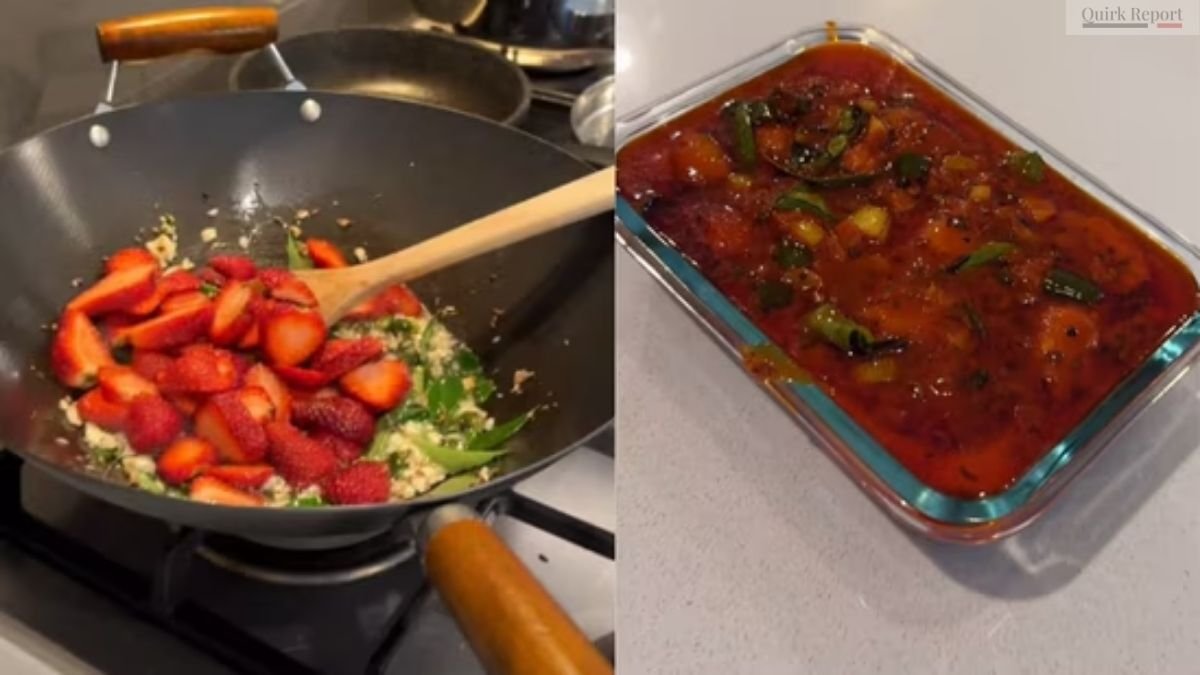
A home kitchen video featuring an Indian couple preparing strawberry pachadi has triggered a wide discussion on Instagram, with users split over whether the dish is a clever twist or a step too far from tradition. Pachadi is a familiar part of South Indian meals, known for its balanced mix of sweet, sour and spice. That is why the use of strawberries, a fruit mostly linked with desserts, has surprised many viewers and pushed the video into the viral category.
In the short clip, the couple follows a cooking method that looks similar to classic pachadi preparation. Oil is heated, spices are added, and chopped strawberries are cooked down with seasoning until they soften and blend into the mix. The couple tastes the dish and appears satisfied with the result, suggesting it works well as a side with rice. What might have remained a casual recipe video quickly turned into a topic of debate once it began circulating widely on social media.
Why Pachadi with strawberry surprised viewers
Pachadi holds a special place in South Indian food culture. It is not just a side dish but a part of everyday meals and festival spreads. Traditionally, pachadi is made using vegetables like cucumber, ash gourd or beetroot, and sometimes fruits such as mango or pineapple. These ingredients fit easily into the sweet and tangy profile that pachadi is known for.
Strawberry, however, is not commonly used in Indian savoury cooking, especially in regional home-style dishes. For many viewers, the fruit feels disconnected from the spice base used in pachadi. This unfamiliar pairing is what led to strong reactions in the comments section. Some users questioned whether the flavours would actually work together, while others felt the dish should not be called pachadi at all.
At the same time, several users defended the idea, pointing out that cooking has always changed with time and access to new ingredients. They argued that if pineapple pachadi is accepted today, it likely also started as an unusual idea once. From this point of view, strawberry pachadi is simply another attempt to explore taste combinations within the same cooking framework.
The focus keyword Pachadi appeared repeatedly in discussions, showing how attached people are to the identity of the dish. The debate was not only about taste but also about what qualifies as a “real” version of a traditional recipe.
Instagram reactions and the fusion food debate
Once the video gained momentum, Instagram users responded with a wide range of opinions. Some praised the couple for trying something new and presenting it confidently. These viewers saw the dish as an example of fusion food done at home, not in a restaurant setting, which made it more relatable.
Others were more critical and said that not every ingredient needs to be added to traditional dishes. They felt that certain recipes should remain close to their original form, especially when they are part of a region’s daily food habits. For these users, strawberry pachadi crossed a line between innovation and unnecessary experimentation.
What stood out was how quickly a simple cooking clip turned into a cultural discussion. People were not only talking about strawberries and spices but also about how food traditions are shaped and reshaped. Some comments even shared personal family recipes of South Indian pachadi, comparing them with what they saw in the video.
This kind of reaction is common with viral food content. Social media platforms reward unusual combinations because they attract attention. As a result, creators often try new mixes that stand out visually and emotionally. Whether or not people try the recipe, they engage with it, which keeps the content circulating.
In this case, the Indian couple did not present the dish as a challenge or a joke. They cooked it as part of their normal routine, which made the reactions even stronger. Viewers were left to decide if this was a creative update to pachadi or a mismatch of flavours.
View this post on Instagram
What this viral Pachadi moment says about food trends
The response to strawberry pachadi highlights how sensitive people are about food linked to identity and memory. Dishes like pachadi are connected to childhood meals, family kitchens and regional customs. When such dishes are changed, even slightly, the reaction tends to be emotional as well as practical.
At the same time, Indian cooking has always adapted. Ingredients, techniques and flavor’s have shifted across centuries based on trade, climate and lifestyle. What is considered traditional today may have once been new and unfamiliar. From that angle, strawberry pachadi fits into a long pattern of gradual change in food habits.
This viral moment also shows how platforms like Instagram influence what people talk about and try in their own kitchens. A dish does not need celebrity backing or restaurant branding to gain attention anymore. A short home video can reach thousands within hours if it triggers curiosity or disagreement.
For food creators, such reactions can be useful feedback. Some may try the recipe out of curiosity, while others may avoid it but still discuss it. Either way, the dish becomes part of a larger online conversation, which is exactly what happened with this pachadi variation.
Whether strawberry pachadi becomes a repeat trend or remains a one-time experiment, it has already achieved something important in the digital space. It has reminded viewers that food is not only about taste but also about memory, comfort and personal boundaries. That is why a simple plate of pachadi, when changed slightly, can lead to such strong and divided opinions.
In the end, the viral response reflects two sides of modern cooking. One side values keeping recipes close to their roots, while the other welcomes new ideas as part of evolving food culture. Strawberry pachadi sits right at that crossroads, making it a perfect example of how even small kitchen experiments can turn into big online discussions.
Catch more trending news on Quirkreport.