



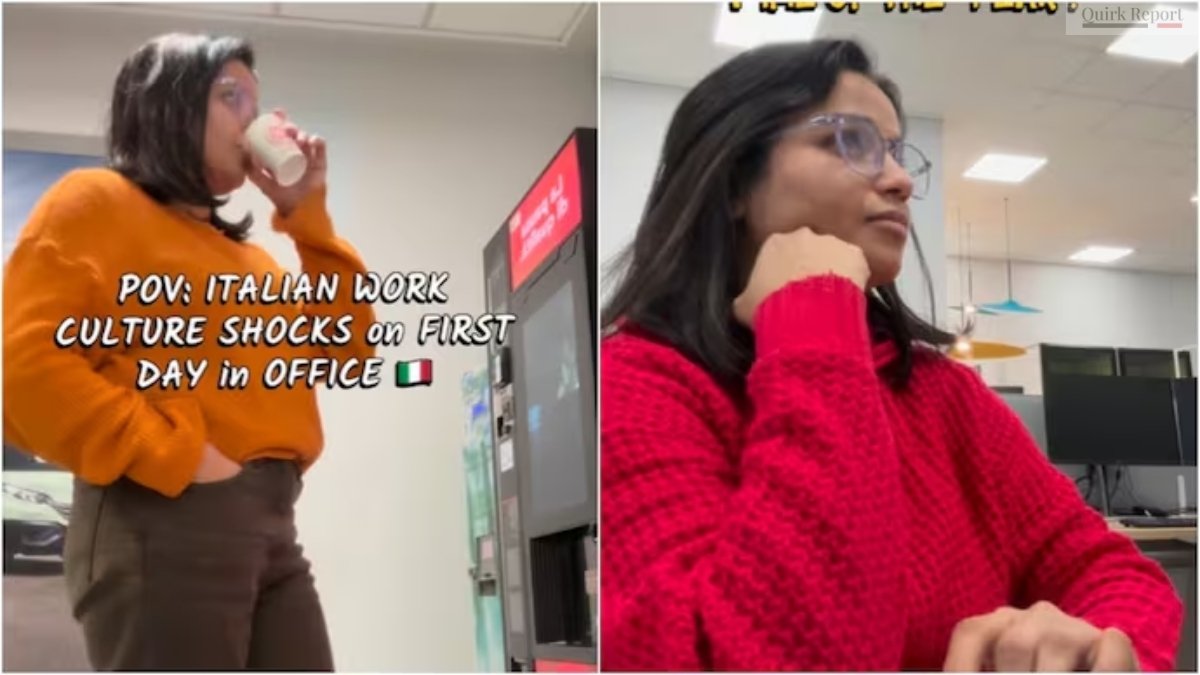
A viral post shared by an Indian IT professional after her first day at work in Italy has captured widespread attention on social media. The post, originally shared on Instagram, documents small but telling moments from her initial day at an Italian workplace and highlights how differently offices function outside India. What began as a personal observation quickly turned into a broader discussion on work habits, expectations, and professional boundaries across cultures.
The woman, who recently joined an Italian tech office, described feeling surprised not by the work itself, but by the environment around it. Her short video clips and captions focused on everyday interactions that felt unusual to her after years of working in Indian corporate settings. As the viral post gained traction, many viewers connected with her experience, especially professionals familiar with long working hours and rigid structures.
Her account did not present exaggerated claims or dramatic criticism. Instead, it calmly listed what stood out to her on the very first day, making the story relatable and believable. The tone of the post played a major role in its reach, as viewers saw it as an honest comparison rather than a complaint or promotion of one system over another.
Informal Hierarchy and Human-Centered Workdays
One of the first moments mentioned in the viral post involved how she addressed her manager. Out of habit, the Indian IT professional referred to him as “Sir,” a common practice in many Indian offices. Her colleagues reacted with surprise and humor, telling her that such formality was unnecessary and that she could simply use his name. This moment reflected clear cultural differences in how authority is perceived and expressed at work.
In many Indian workplaces, hierarchy often shapes communication, decision-making, and even social interaction. In contrast, her Italian colleagues appeared comfortable with a flat structure where managers and employees interact casually. This sense of equality made her feel less pressured and more comfortable asking questions during her first day experience.
Another detail that stood out was the importance given to coffee breaks. These were not treated as optional or rushed pauses. When she tried to skip a break to continue working, her teammates insisted she join them. During these breaks, work-related discussions were discouraged. Conversations focused on personal interests, travel plans, and everyday life, reinforcing a strong sense of office camaraderie.
She also mentioned that her manager insisted on paying for her coffee, a small but symbolic gesture that emphasized inclusion and warmth rather than authority. For many viewers, this detail represented a level of workplace friendliness they felt was missing in their own professional lives.
The structure of the workday also differed significantly from what she was used to. There was no visible monitoring of arrival or departure times. As long as tasks were completed, employees were trusted to manage their schedules responsibly. This trust-based system stood out as a defining feature of the workplace she described.
View this post on Instagram
Strong Work-Life Balance and Online Reactions
The most discussed aspect of the viral post was how strictly personal time was respected. According to her experience, the office emptied shortly after official working hours ended. She noted that by just a few minutes past 6 pm, the workplace was nearly vacant. Colleagues made it clear that contacting coworkers after hours was discouraged unless absolutely necessary.
This approach strongly reflected the emphasis on work-life balance. For many viewers, especially those working in demanding roles, this detail felt striking. In the comments, several users pointed out how common late-night calls, messages, and weekend work have become in their own offices, particularly in India’s IT sector.
The post also highlighted how mistakes were handled. Instead of being met with criticism or pressure, errors were treated as part of the learning process. Colleagues offered guidance and reassurance, making it easier for her to settle into the team. This supportive environment helped with team integration, especially important for someone adjusting to a new country and work culture.
The role of manager support was another key takeaway. Leadership was described as approachable and involved, without creating fear or distance. This style of management, combined with relaxed communication norms, left a strong impression on the new employee and resonated with many online viewers.
However, not all reactions were positive. Some users, including those familiar with European workplaces, pointed out that her experience might not represent every Italian company. They noted that office culture can vary widely depending on industry, organization size, and leadership style. A few cautioned against generalizing an entire country’s work culture based on one workplace.
Despite mixed opinions, the viral post succeeded in starting a meaningful conversation. It encouraged professionals to reflect on what they expect from their workplaces and whether productivity must always come at the cost of personal time. For many, the story highlighted how small changes in communication, trust, and respect can significantly impact daily work life.
The post also arrives at a time when global discussions around burnout, mental health, and employee satisfaction are gaining momentum. As more professionals work across borders or collaborate with international teams, exposure to different work styles is becoming more common.
While the experience shared may not apply universally, it has clearly resonated with a large audience. The viral post serves as a reminder that workplace norms are shaped by culture and choice, and that alternative models of working do exist. Whether companies choose to adopt such practices or not, the conversation it has sparked is unlikely to fade anytime soon.
Catch more trending news on Quirkreport.