




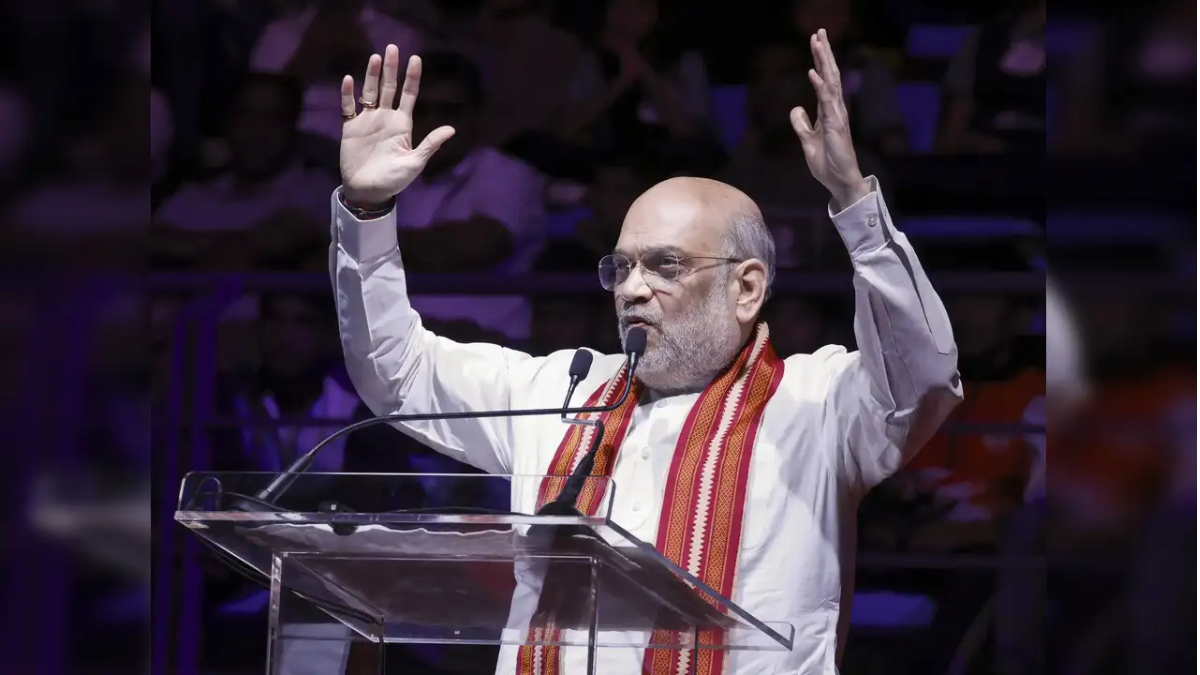
After Railway Minister Ashwini Vaishnaw, Home Minister Amit Shah has now switched to Zoho Mail — a Chennai-based homegrown alternative to foreign email services. The move comes as India strengthens its push for indigenous digital tools and self-reliance.
In Today’s Top News Union Home Minister Amit Shah has announced that he has migrated his official email communication to Zoho Mail, a platform developed by Chennai-based Zoho Corporation. This marks another step in the government’s growing adoption of Indian software as part of its Aatmanirbhar Bharat initiative.
Taking to X, formerly known as Twitter, Shah shared his new email address with the public, writing, “Hello everyone, I have switched to Zoho Mail. Kindly note the change in my email address. My new email address is amitshah.bjp@zohomail.in. For future correspondence via mail, kindly use this address.” The statement also reflected the government’s continued endorsement of local technology over global platforms.
Prior to Shah’s announcement, Railway and IT Minister Ashwini Vaishnaw had also adopted Zoho’s suite of applications for official use. His transition, announced earlier this year, set the stage for other ministers to follow. Officials view this shift as part of a broader digital transformation that prioritises Indian-made platforms for data privacy and national sovereignty.
Government’s Push for Swadeshi Technology
The Centre has consistently promoted the use of indigenous digital tools in government departments. Over the past year, several ministries have explored homegrown software solutions to reduce dependence on foreign-based services such as Google Workspace and Microsoft Outlook.
The Ministry of Education (MoE) recently issued a circular directing its officials to use Zoho Office Suite for official communication. The directive, titled “Strengthening Digital Sovereignty under Swadeshi Movement,” emphasised the importance of using Indian technologies that ensure data remains within the country’s jurisdiction.
In the circular, the ministry wrote, “By embracing Zoho’s indigenous office tools, we empower India to lead with homegrown innovation, strengthen digital sovereignty, and secure our data for a self-reliant future.” The statement echoes the government’s wider goal of fostering self-reliance in both hardware and software ecosystems.
Hello everyone,
I have switched to Zoho Mail. Kindly note the change in my email address.
My new email address is amitshah.bjp @ https://t.co/32C314L8Ct. For future correspondence via mail, kindly use this address.
Thank you for your kind attention to this matter.
— Amit Shah (@AmitShah) October 8, 2025
About Zoho Mail and Its Founder
Founded in 1996 by Sridhar Vembu, Zoho Corporation has grown into one of India’s most successful software-as-a-service (SaaS) companies. Headquartered in Chennai and operating globally, Zoho offers more than 50 online productivity and business applications, including tools for communication, document management, and finance.
Zoho Mail, one of its flagship products, is known for strong privacy protection and ad-free experience. It provides enterprise-grade features like end-to-end encryption, calendar integration, and administrative controls for organizations. The platform has gained popularity among Indian startups, educational institutions, and now government offices looking for trusted domestic alternatives.
Vembu, who has been vocal about promoting “Made in India” technologies, welcomed the government’s decision. In earlier interviews, he said that Zoho’s mission aligns with India’s digital independence movement. The adoption of Zoho Mail by key ministries, he noted, validates the company’s long-standing belief that India can build world-class software domestically.
Aatmanirbhar Bharat and Digital Sovereignty
Prime Minister Narendra Modi’s Aatmanirbhar Bharat campaign aims to make India self-reliant across sectors, including technology. The shift to indigenous software tools represents one of the campaign’s core objectives — achieving digital independence and protecting sensitive government data.
The use of platforms like Zoho ensures that official communication and documents remain within the country’s data frameworks. Experts say this transition also reduces exposure to global surveillance risks and foreign data laws that govern international software providers.
According to technology policy analysts, India’s push for “digital sovereignty” will likely accelerate as more departments follow Shah’s example. The move also strengthens the country’s domestic SaaS ecosystem, which has been growing steadily and competing on the global stage.
Wider Impact of Top News
With two senior ministers now using Zoho Mail for their official correspondence, industry observers expect other ministries and public offices to adopt the service in the coming months. Officials within the IT Ministry reportedly plan to evaluate more India-made email and cloud solutions for government-wide integration.
In addition to boosting confidence in local companies, this transition signals a larger mindset shift — from consumption of foreign technology to the creation of domestic innovation. Analysts say that continued government adoption could encourage private enterprises and educational institutions to follow suit, making indigenous software a mainstream choice.
Zoho’s recent collaboration with several state governments further demonstrates the growing demand for locally developed tools. The company has already launched secure digital workspaces tailored for public institutions, ensuring compliance with India’s evolving data protection regulations.
A Step Towards Self-Reliant Governance
Amit Shah’s move to Zoho Mail is not just a change in email service — it reflects India’s broader vision for self-reliant governance. As global cybersecurity concerns rise, ensuring that official data remains within national borders has become a strategic priority.
The shift also reinforces the belief that Indian companies can deliver reliable, secure, and scalable alternatives to global technology giants. With policymakers leading by example, the message is clear: India’s future in technology lies in its own innovation and talent.
As the government continues to champion Swadeshi digital platforms, the adoption of Zoho Mail stands as a symbolic milestone — merging national pride with practical technological advancement. It’s a reminder that India’s path to digital independence begins with small, consistent choices at the highest levels of leadership.
Catch big news and top news headlines with the latest news updates. Quirk Report delivers trusted stories from India and around the world.
Follow Quirk Report on Instagram, Twitter(X) and Facebook.