



India’s 77th Republic Day is just around the corner, and as the nation prepares for the grand celebrations on January 26, 2026, a curious question pops up every year—are we celebrating the 76th or 77th anniversary? If you’ve ever found yourself confused about the count, you’re not alone. Many people wonder why the numbers don’t quite add up when they do simple math from 1950 to 2026.
As the tricolour prepares to rise at Kartavya Path in New Delhi and millions of Indians gear up to witness the spectacular Republic Day Parade 2026, it’s worth understanding what we’re actually celebrating and why this particular counting system exists. Republic Day 2026 marks a momentous occasion when India became a sovereign republic, replacing the British monarch as its head of state with an elected president.
The confusion stems from a simple mathematical puzzle: if the Constitution came into force on January 26, 1950, and we’re now in 2026, shouldn’t that be 76 years? So why do we call it the 77th Republic Day? Let’s clear up this annual mystery once and for all.
Understanding The Republic Day Anniversary Count
The key to solving this puzzle lies in how we count anniversaries. When India celebrated its first Republic Day on January 26, 1950, that was the 1st Republic Day—not the zero Republic Day. Think of it like birthdays: when you’re born, you don’t start at age zero in celebration terms; your first birthday party happens when you turn one year old, even though you’ve only completed one year of life.
Following this logic, January 26, 1951, marked the 2nd Republic Day (after completing one full year), and January 26, 1952, was the 3rd Republic Day. By this counting method, January 26, 2026, becomes the 77th Republic Day anniversary, even though only 76 complete years have passed since 1950. It’s the 77th occurrence of the celebration itself.
This republic day anniversary calculation often trips people up because we naturally think in terms of completed years. However, the official counting includes the inaugural day itself as the first celebration. So while mathematically 76 years have elapsed between 1950 and 2026, the ceremonial count reaches 77 because we’re including that very first day when Dr. Rajendra Prasad unfurled the tricolour amid a historic 21-gun salute.
Why January 26 Was Chosen For India’s Constitution
Many people searching for “why is January 26 celebrated as Republic Day” discover a fascinating piece of history. The date wasn’t randomly selected—it was deliberately chosen to honour a pivotal moment in India’s freedom struggle. On January 26, 1930, exactly 20 years before the Constitution came into force, the Indian National Congress declared Purna Swaraj or complete independence at its historic Lahore Session in December 1929.
That declaration made January 26, 1930, India’s first Independence Day, long before the actual independence in 1947. When the Constituent Assembly, led by Dr. B.R. Ambedkar, completed the monumental task of drafting India’s Constitution by November 26, 1949, they faced a choice of when to bring it into effect. Rather than implementing it immediately, they waited until January 26, 1950, to pay tribute to that earlier pledge of complete freedom.
The Republic Day Parade 2026 will once again showcase this rich history, with displays highlighting how far India has come since that constitutional dawn. From a newly independent nation finding its feet to becoming the world’s largest democracy, the journey from the 1st Republic Day to the 77th has been nothing short of extraordinary.
What Makes Republic Day 2026 Special
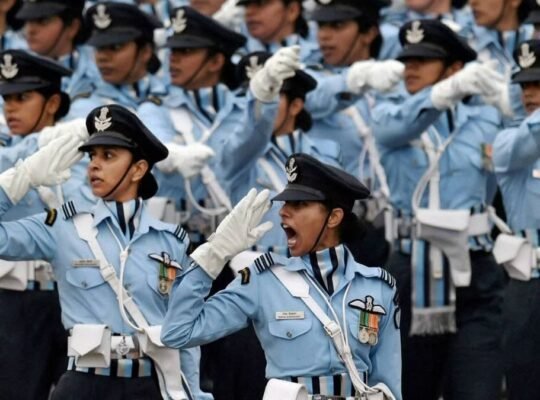
This year’s celebrations carry particular significance as India continues to assert its position on the global stage. The 77th Republic Day will feature the traditional grandeur at Kartavya Path (formerly Rajpath), with military might, cultural diversity, and technological achievements on full display. For those wondering “what happens on Republic Day in India,” the answer includes elaborate tableaux from various states, precision military marches, and breathtaking air shows by the Indian Air Force.
The day commemorates not just the adoption of the Constitution but the transformation of India from a dominion to a sovereign republic where power truly rests with the people. Although India gained independence on August 15, 1947, it continued functioning under the modified Government of India Act, 1935, until the Constitution was ready. The adoption of our own Constitution on January 26, 1950, marked the true completion of India’s journey to self-governance.
As families across the nation tune in to watch the Republic Day parade 2026, they’ll witness more than just a ceremonial display—they’ll see a celebration of democratic values, constitutional rights, and the enduring spirit of a nation that chose to govern itself through a document that begins with “We, the people of India.” Whether you call it the 77th or mistakenly think of it as the 78th, what matters most is understanding that this day represents India’s commitment to justice, liberty, equality, and fraternity—principles that remain as relevant today as they were 76 years ago.
So when someone asks you “is this the 76th or 77th Republic Day,” you can confidently explain that it’s the 77th celebration of the day our Constitution came alive, even if the math seems slightly off at first glance. After all, some things are worth celebrating from day one.